TMJ Surgery

At North Austin Oral Surgery, we specialize in both surgical and non-surgical treatment for temporomandibular joint (TMJ) disorders — helping patients relieve pain, restore function, and improve quality of life. Our surgeons are highly experienced in advanced TMJ surgical techniques and work closely with each patient to determine the most effective, minimally invasive approach for long-term relief.

Overview

Understanding TMJ Disorders

The temporomandibular joint (TMJ) is the hinge that connects your lower jaw to your skull, allowing you to speak, chew, and yawn comfortably. When this joint becomes inflamed, misaligned, or damaged, it can lead to chronic discomfort and difficulty with jaw movement — a condition known as TMJ disorder (TMD).
Common symptoms of TMJ disorders include:
  • Jaw pain or tenderness
  • Clicking, popping, or locking of the jaw
  • Headaches or ear discomfort
  • Pain while chewing or talking
  • Limited jaw movement or stiffness
Many patients find relief through non-surgical treatments, such as bite splints, anti-inflammatory medication, or physical therapy. However, when pain or limited movement persists despite conservative care, surgery may be the most effective option. Our surgeons perform a detailed evaluation — including 3D imaging (MRI and CBCT) and joint assessment — to determine the best approach for your condition.

Types of TMJ Surgery

Our practice offers a full range of TMJ surgical procedures, from minimally invasive techniques to joint reconstruction.
Arthrocentesis: A minimally invasive in-office procedure that flushes the joint with sterile fluid to reduce inflammation and improve mobility. The purpose of this procedure is to remove tissue breakdown products and reduce inflammation.
Open-Joint (Arthroplasty) Surgery: Open-joint (Arthroplasty) Surgery is performed to remove irregularities of the mandibular condyle and reposition and stabilize the TMJ disc, with the goal of improving jaw movement, comfort, and function. The procedure is completed under general anesthesia in an outpatient surgery center, and patients typically return home the same day after a brief recovery period. Chewing restrictions are required for several months following surgery.
Postoperative care includes jaw physiotherapy to maximize range of motion and function, which is often self-directed but may involve a physical therapist if needed. Most patients will also require an interocclusal splint for several months — and sometimes up to a year — to support healing, improve comfort, and help guide proper jaw movement. All aspects of the procedure, including benefits, risks, and recovery expectations, will be reviewed in detail prior to surgery.
Total Joint Replacement: TMJ Replacement may be necessary under the following conditions:
  • TMJ arthritis/resorption: When degenerative changes significantly impair joint function and cause debilitating pain
  • Joint immobility: Surgical intervention becomes necessary when joint fusion restricts movement
  • Failed previous Joint Surgeries: Total Joint Replacement might be recommended if previous attempts at joint surgery have been unsuccessful in resolving TMJ issues
  • Trauma or TMJ Pathology: Structural deformities resulting from trauma or pathologic conditions may necessitate joint replacement

Your journey through a TMJ Surgery procedure

Before surgery

Your journey begins with a comprehensive consultation and imaging review.

  • Diagnosis & planning: Your surgeon will discuss your imaging results and determine the most effective surgical or non-surgical plan
  • Preoperative preparation: You may need to avoid certain medications, fast before your procedure, and arrange for transportation home after surgery
  • Anesthesia: Depending on the procedure, TMJ Surgery is performed under IV Sedation or General Anesthesia for comfort and safety
Our team will provide detailed preoperative instructions to ensure you feel fully prepared.
During surgery

Your procedure will depend on the severity and nature of your TMJ disorder:

  • Minimally invasive procedures (Arthrocentesis): Completed with two small needles into the joint space, typically in under an hour. This is done in-office under IV Sedation
  • Arthroplasty or Total Joint Replacement: Performed through a carefully placed incision in front of the ear and along the hairline to repair or replace the joint
Throughout surgery, our surgeons work meticulously to preserve surrounding tissue and optimize long-term jaw function.
After surgery

Recovery depends on the type of procedure performed.

  • Discomfort & swelling: Soreness and swelling are common for the first few days and are managed with medication, cold compresses and jaw rest
  • Diet: A soft or liquid diet is recommended for one to two weeks after Arthrocentesis. After Arthroplasty, a soft non-chew diet is recommended for a minimum of 3 months
  • Physical therapy: Gentle jaw exercises are often prescribed to restore movement and prevent stiffness
  • Follow-up care: You’ll attend regular postoperative visits so your surgeon can monitor healing and joint function
With proper care, most patients experience significant improvement in jaw movement, pain reduction, and overall quality of life.

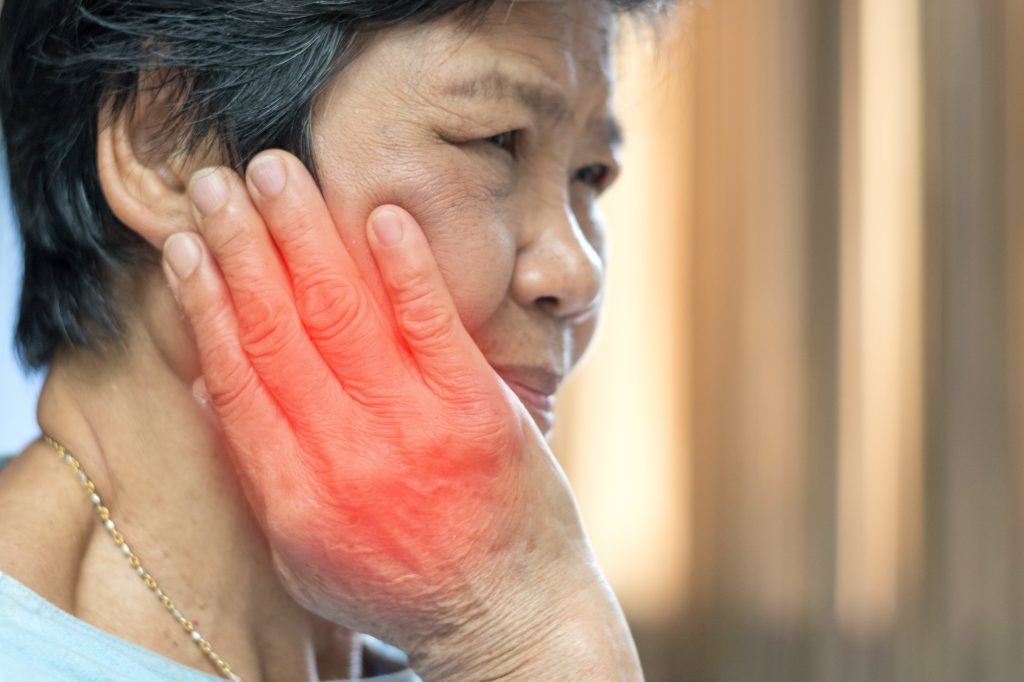
Our board-certified surgeons are leaders in TMJ diagnosis and treatment, combining surgical precision with compassionate care to help patients regain comfort and confidence.

Schedule your consultation today to learn if TMJ Surgery is right for you.

Your questions, answered.

North Austin Oral Surgery is here to address all your questions and concerns regarding TMJ Surgery.
TMJ Surgery is typically recommended only when conservative treatments — such as splints, physical therapy, or medications — haven’t provided lasting relief. Imaging and a clinical evaluation determine whether surgical correction is necessary.
Our surgeons perform Arthrocentesis, Arthroscopy, Open-Joint Repair, and Total Joint Replacement, depending on the severity of joint damage. Minimally invasive approaches are used whenever possible.
Recovery varies by procedure. Minimally invasive surgeries typically heal within days, while open-joint or replacement cases may take several weeks and include physical therapy for full recovery.
Incisions are placed in natural skin creases near the ear or hairline, and scars typically fade over time.
Most patients experience major improvement in jaw function and pain relief, but outcomes depend on the type of procedure and your individual healing response.
Yes. We often collaborate with physical therapists, orthodontists, and restorative dentists to ensure a comprehensive treatment plan and lasting results.
